

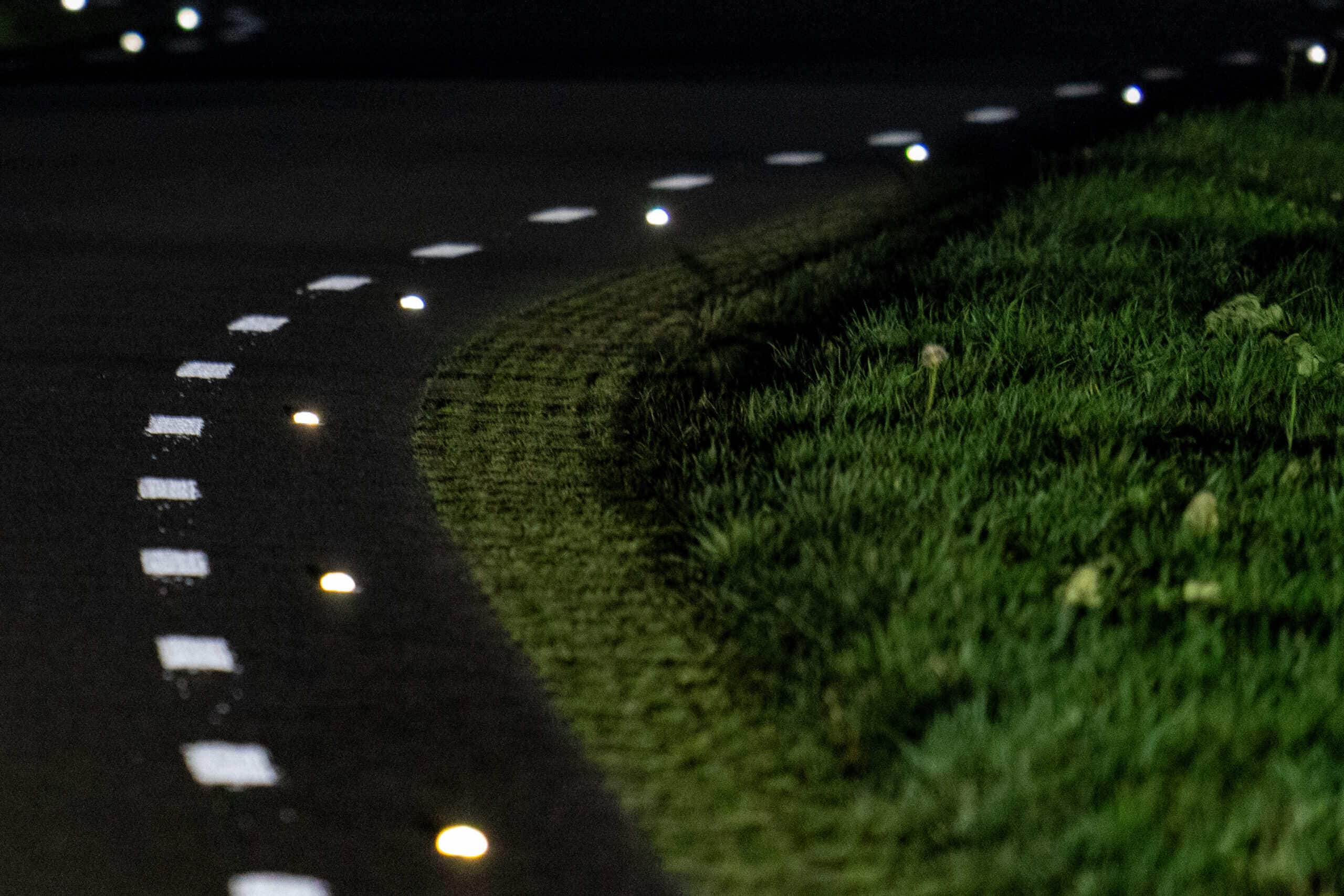
Cat’s eye road reflectors are glass studs set into the road surface that reflect the light from headlights back towards the driver. This keeps the course of the road clearly visible at night, even in the rain. You’ll find them on roundabouts, regional roads and industrial estates, among other places. On this page you can read how cat’s eye reflectors work, where they are used and how they are installed.
What are cat’s eyes in the road?
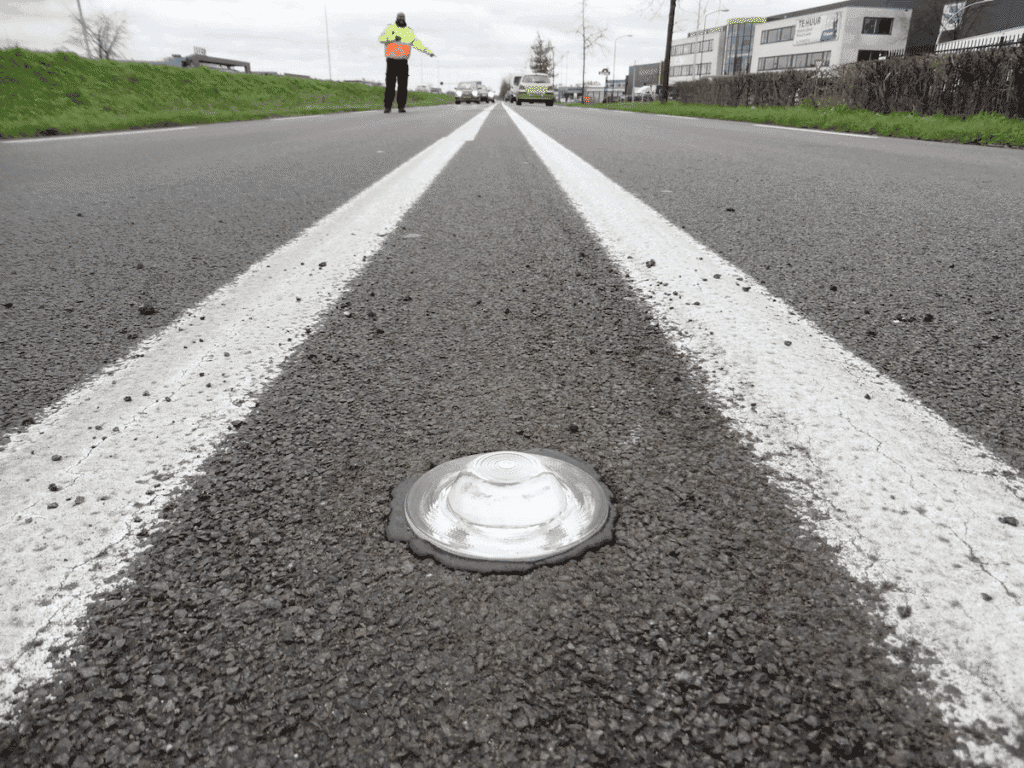
At Van Wylick, we call cat’s eyes glass road studs. Each stud is a solid ball of glass that reflects light. Our glass road studs are made of toughened glass, with a compressive strength of up to 80 tonnes. An aluminium coating on the underside provides the reflection. The stud is partly sunk into the road surface, so only the top protrudes above it. Thanks to its round shape, the stud remains visible from every angle.
The story behind the name
The cat’s eye was invented by Percy Shaw from Halifax, England, who applied for a patent on it in 1934. According to the best-known story, he got the idea on a foggy evening when he saw the eyes of a cat light up in his headlights. Nobody knows for certain whether that’s really how it happened. What is certain is that he built on a reflective lens developed by fellow Briton Richard Hollins Murray.
The cat’s eye’s big breakthrough came during the Second World War. To give German bombers nothing to navigate by, all public lighting in Britain was switched off at night. It was on those dark roads that cat’s eyes proved their worth. The British Ministry of Transport approved them, and demand grew enormously. Eventually, Shaw’s company was producing more than a million cat’s eyes a year for roads all over the world.
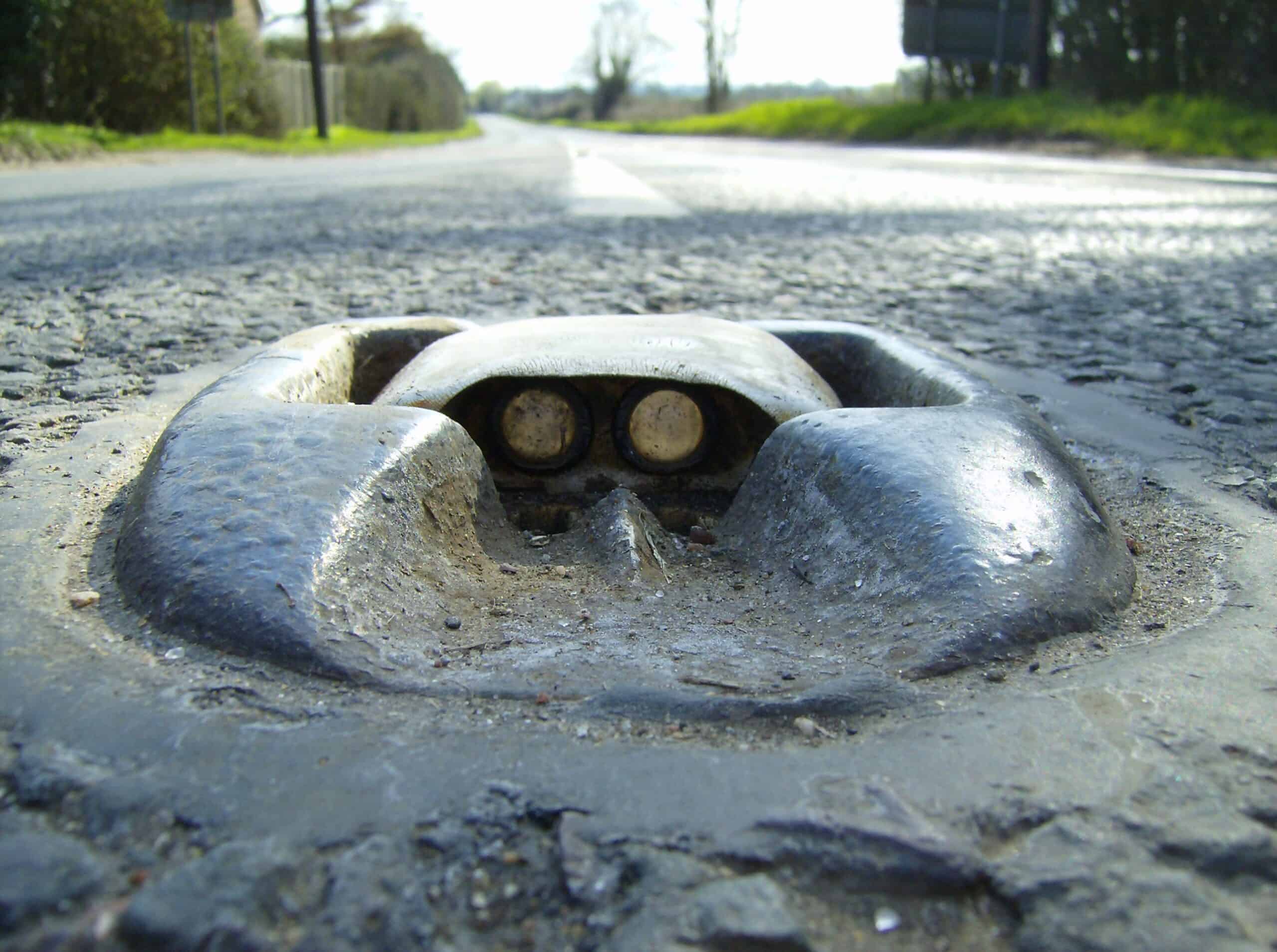
Shaw’s cat’s eye consisted of two small glass reflectors for each direction of travel, set in a rubber holder inside a cast-iron housing. The glass road studs we supply work on the same principle but are simpler: a single glass ball with an aluminium coating, sunk directly into the road surface.

How does a cat’s eye reflector in the road work?
A glass cat’s eye works through retroreflection, which means it reflects light back to where it came from. Light from a headlight passes through the glass, and the ball shape focuses it onto the aluminium coating on the underside. The coating then reflects the light back through the glass, straight towards the vehicle. As a result, the driver sees a bright point of light on the road.
Sizes and colours of glass cat’s eye reflectors
Our glass road studs are available in three diameters: 50, 75 and 100 mm. Which size and model is right depends on the location, the type of traffic and the speed at which people drive there. A larger stud is visible from further away, which makes it well suited to roads with higher speeds. A smaller one suits places with slower traffic. The surface also matters, because some versions are better suited to concrete and others to asphalt.
| Model | Diameter | Features | |
|---|---|---|---|
 |
LUX 1 | 50 mm | Mostly used in concrete elements to enhance the safety of roundabouts and traffic islands. Not suitable for installation in asphalt. |
 |
LUX 2 | 50 mm | Also known as ‘kerb stud’ is designed for installation in concrete. No adhesive needed. |
 |
LUX 3 | 100 mm | 80-tonne compressive strength and a large reflective surface, for maximum visibility in heavy traffic |
 |
LUX 4 | 100 mm | Low-profile version of the LUX 3, for locations where a low installation height is required |
 |
LUX 6 | 50 mm | Compact model for quick installation in concrete, with a drilling depth of just 12 mm and a low profile |
 |
LUX 7 | 75 mm | Bidirectional reflection, up to three times brighter in the direction of travel than standard reflectors |
The most common colour is white (clear). Our studs are also available in green, yellow, amber, blue and red. These coloured versions are often chosen for aesthetic reasons, for example as decoration.
The benefits of cat’s eyes in the road
Visible in the rain. A film of water on the road can reduce how well white road markings reflect. A cat’s eye protrudes above the road surface, so it stays clearly visible.
No power required. A cat’s eye works using nothing but the light from headlights. It needs no cables, batteries or connections.
Long service life. Toughened glass is strong and scratch-resistant, so traffic, sand and road salt don’t dull the reflection. A properly installed cat’s eye won’t need replacing for years.
Cost-effective solution. Because they need no power or connections, cat’s eyes are an affordable way to make a road more visible at night, especially compared with roadside lighting.

Where are cat’s eyes used?
Cat’s eyes are mainly used where road users need guidance in the dark. The most common applications are:
- Roundabouts and traffic islands: the edge of the roundabout and its entries and exits are clearly marked.
- Bends and rural roads: especially where there is no street lighting, cat’s eyes show where the road is heading.
- Cycle paths: to mark the course of the path or the separation from the carriageway.
- Car parks and industrial estates: driving routes, parking bays and exits remain easy to follow in the dark.
- Speed bumps: drivers can see the bump coming in good time, even in the dark.
- Slip roads: these often have sharp bends, and cat’s eyes keep the course of the bend clearly visible.
- Decorative applications: coloured versions give driveways and squares an attractive accent.
Installing cat’s eyes
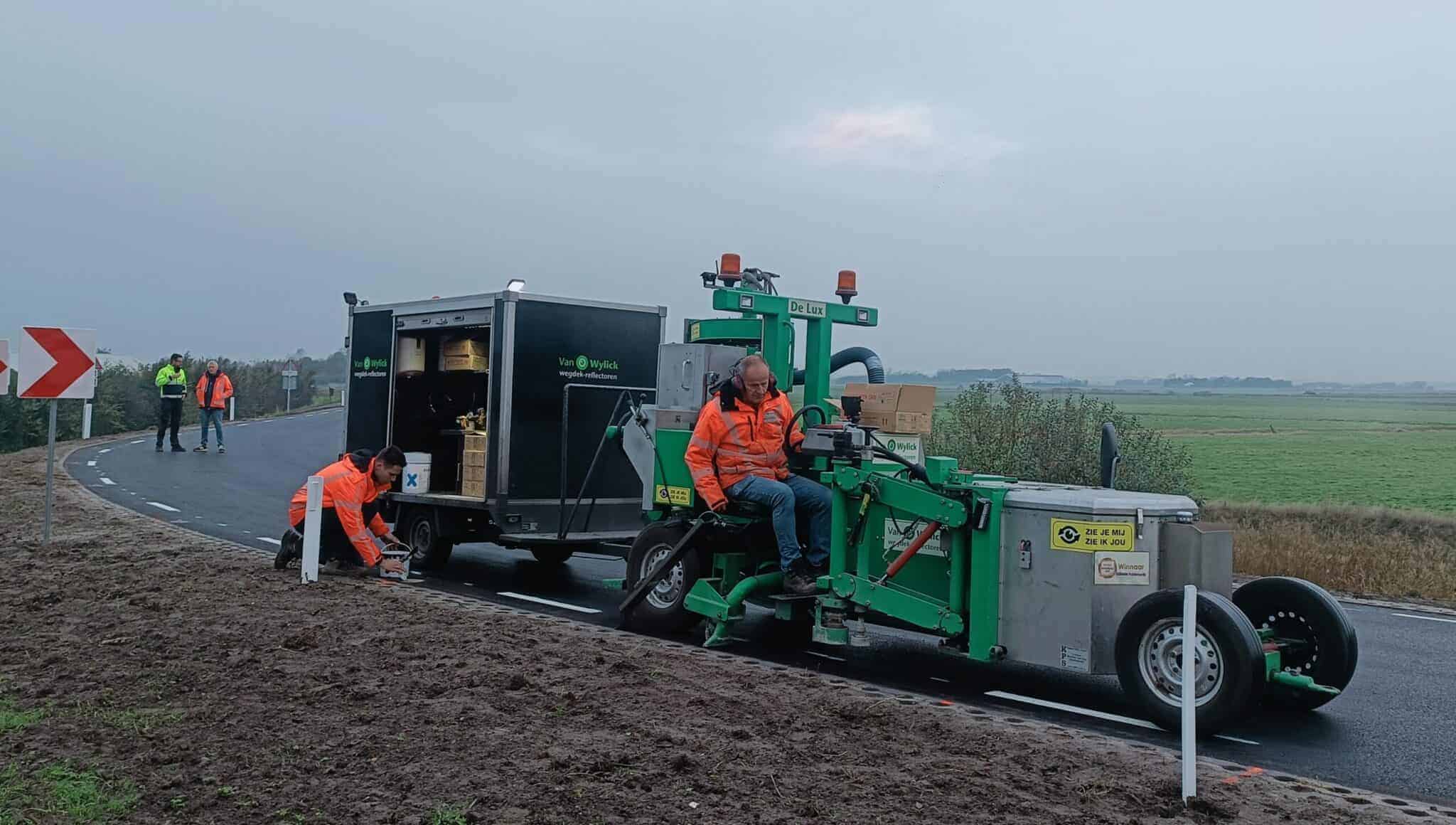
Van Wylick has been the specialist in installing glass road studs since 1993. We use a two-component adhesive for a strong bond. Glass road studs can be installed in many different surfaces, including asphalt, concrete, natural stone and paving. For installation in asphalt, we use our own installation machine, “De Lux”. The only time installation isn’t possible is during frost, because the adhesive cannot cure properly.
Order glass road studs from Van Wylick
Looking for reliable cat’s eyes for your project? We supply high-quality LUX glass road studs to contractors, distributors, road authorities and businesses all over the world.
Why choose our road studs?
- Tested quality: all LUX studs meet European standard EN 1463 and are CE marked.
- Built to last: toughened glass that stays bright for years.
- Worldwide delivery: fast and secure shipping from the Netherlands.
- Expert advice: not sure which model you need? We’ll help you choose.
Need even more visibility? We also supply solar road studs.
Visit our glass road studs page and request a quote today.