



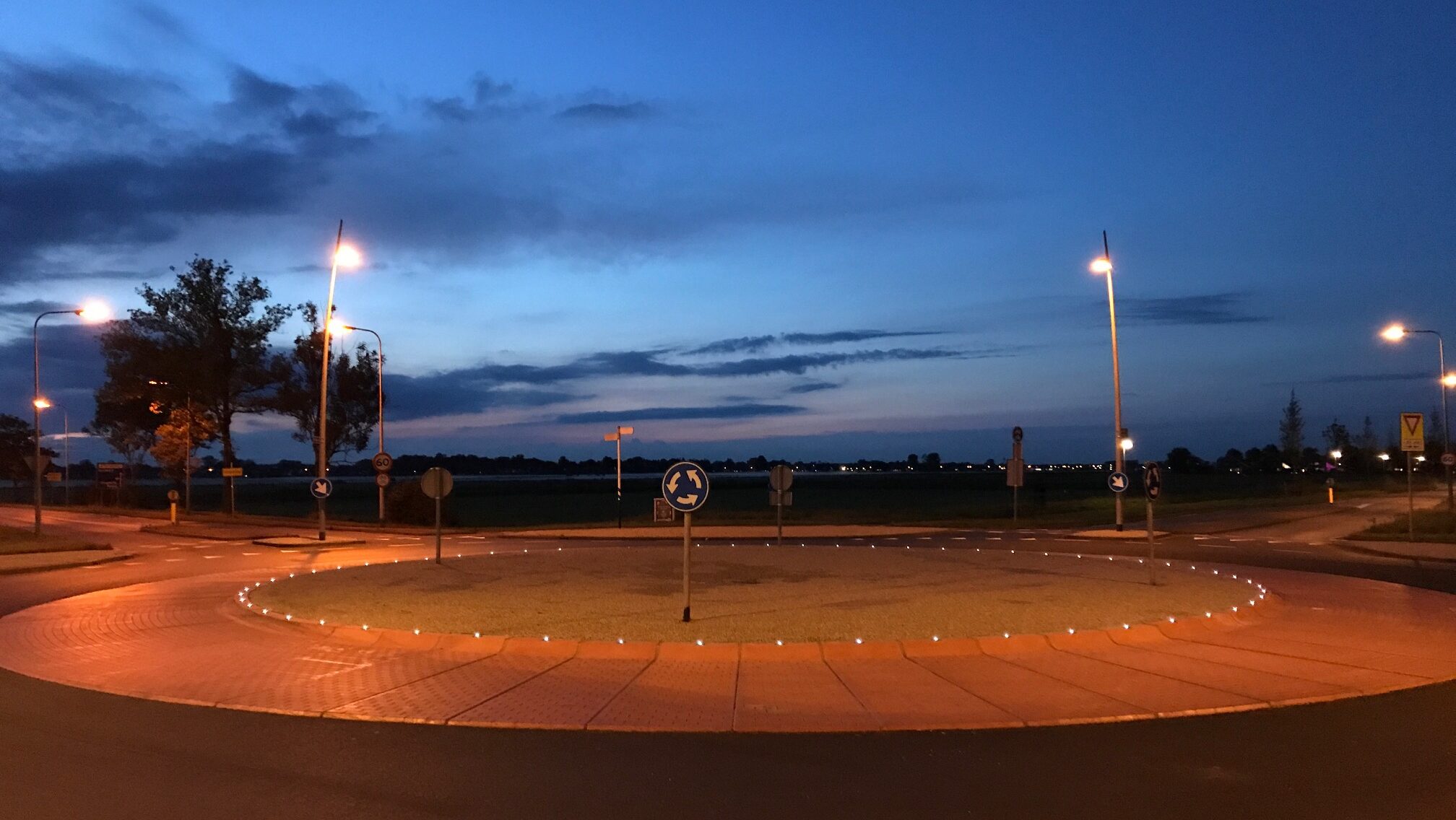
Comparing Glass vs Solar Road Studs
Every year, poor road visibility contributes to thousands of traffic accidents across Europe — especially during fog, rain, and nighttime driving. The question infrastructure professionals face isn’t whether road studs improve safety (they do), but which type delivers the best results for their specific conditions.
If you’re comparing Solar Road Studs (Active Road Studs) with Glass Road Studs, this guide will help you make an informed decision based on real-world performance, application requirements, and project constraints.
Quick Comparison: Solar vs. Glass Road Studs at a Glance
Let’s start with the main features of both types of road studs. The comparison below includes our two best-selling products; the 100mm LUX 3 (glass road stud) and the 122mm LUX lunar 5 (solar road stud).
| Type | Solar Road Stud | Glass Road Stud |
|---|---|---|
| Picture | 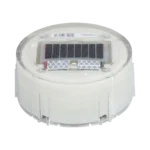 |
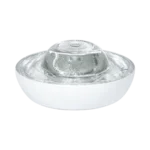 |
| Product type | LUX Lunar 5 | LUX 3 |
| Visibility Method | Self-illuminating LED | Retro-reflective glass (360°) |
| Visibility Distance | Up to 900 meters | Up to 200 meters |
| Power Source | Solar panel + battery | None required |
| Lifespan | 8-10 years | 10+ years (can outlive road surface) |
| Maintenance | Maintenance-free | Maintenance-free |
| CE Certified | ✓ | ✓ |
What Are Solar Road Studs (Active Road Studs)?
Solar Road Studs are active safety devices that emit their own light through LED technology. During daylight hours, an integrated solar panel charges an internal battery. At dusk or in low-visibility conditions, the LEDs automatically activate, creating a clearly visible guidance system for drivers and cyclists.
Key features:
- Photovoltaic solar panel for autonomous charging
- Automatic twilight sensor activation
- High-intensity LEDs visible from up to 900 meters
- Weatherproof housing (IP68 rated)
- Flashing or constant light modes available
Solar road studs don’t rely on vehicle headlights — they actively guide road users from a very far distance.
What Are Glass Road Studs?
Glass Road Studs use retro-reflective technology to bounce light from vehicle headlights back to the driver. The LUX glass construction provides 360-degree reflection, making them visible from any approach angle.
Key features:
- High-quality retro-reflective glass prisms
- 360-degree visibility (not directional)
- No moving parts or electronics
- Extremely impact-resistant construction
- Simple installation in asphalt, concrete, or natural stone
Glass road studs excel through proven reliability — they’re passive, durable, and require almost zero maintenance when properly installed.
Installation Considerations
While both types of road studs can be installed in asphalt, concrete, or natural stone, there is an important difference in installation precision.
Glass Road Studs are straightforward to install thanks to their 360-degree retro-reflective design. Regardless of the exact orientation, the glass prisms will reflect light from any direction, making the installation process more forgiving.
Solar Road Studs require more precise installation. The LED light emits in one direction (typically along the road), so the unit must be oriented correctly during installation to ensure optimal visibility for approaching traffic. This requires careful alignment and more installation time per unit.
Conclusion: Two Excellent Solutions for Different Needs
When comparing Solar Road Studs and Glass Road Studs, there’s significant overlap in what both products can achieve — both improve road safety, both are durable, and both are maintenance-free solutions that meet the highest European standards.
Both technologies excel in their own applications. Some projects demand the active visibility of solar LEDs, while others benefit from the simplicity and scalability of glass road studs for large-scale installations.
The substantial price difference between the two also means they serve different project types and budgets naturally. This isn’t a limitation — it’s what allows both solutions to be successful in their intended use cases.
Frequently Asked Questions
Can glass road studs work on bicycle paths?
No. Bicycle lights don’t generate sufficient beam strength for retro-reflective glass to provide adequate visibility. Solar road studs with active LEDs are the only safe option for cycling infrastructure.
Why not just use solar road studs everywhere if they’re more visible?
Large-scale projects often require thousands of road studs. Solar units are more complex to install and are best used strategically at critical points. Glass road studs provide cost-effective coverage for extensive areas.
Are glass road studs visible in heavy rain?
Yes, retro-reflective glass continues to work in rain, though effectiveness is slightly reduced compared to dry conditions. Also Solar road studs are perfectly visible in heavy rain. Often much better than the road markings.
Can I mix both types on the same road?
Absolutely. Many projects use solar road studs in critical high-risk sections (curves, intersections, bicycle paths) and glass road studs in standard sections to optimize performance and practicality.
What is the typical quantity difference between the two?
Solar road studs are typically used in quantities of 50-500 units for strategic placement at critical points. Glass road studs are used in quantities of 500-5,000+ units for comprehensive road marking in large-scale projects.
Are these products CE-certified?
Yes, all our LUX road studs (both solar and glass) are CE-certified and meet European safety and quality standards.
Get Expert Advice for Your Project
Van Wylick has specialized in road stud installation and supply since 1993. Our LUX glass and solar road studs are trusted by municipalities, contractors, and developers across Europe. Contact us to speak with a specialist or simply request a quote and receive a quotation within 24 hours.